

Cat Breeds & EMS Codes: Understanding the World of Feline Diversity
Have you ever wondered how many cat breeds exist?
Surprisingly, there is no exact answer. While many breeds are well established, others are still developing—small experimental lines that may become successful in the future or disappear entirely.
Cat breeds form in a variety of ways: through natural evolution, genetic mutations, hybridization, or intentional human design. Understanding how breeds originate helps new owners and beginner breeders navigate pedigrees, genetics, and EMS codes.
This guide includes a dedicated section about Scottish Folds, including their EMS codes (SFS, SFL, SCS, SCL).
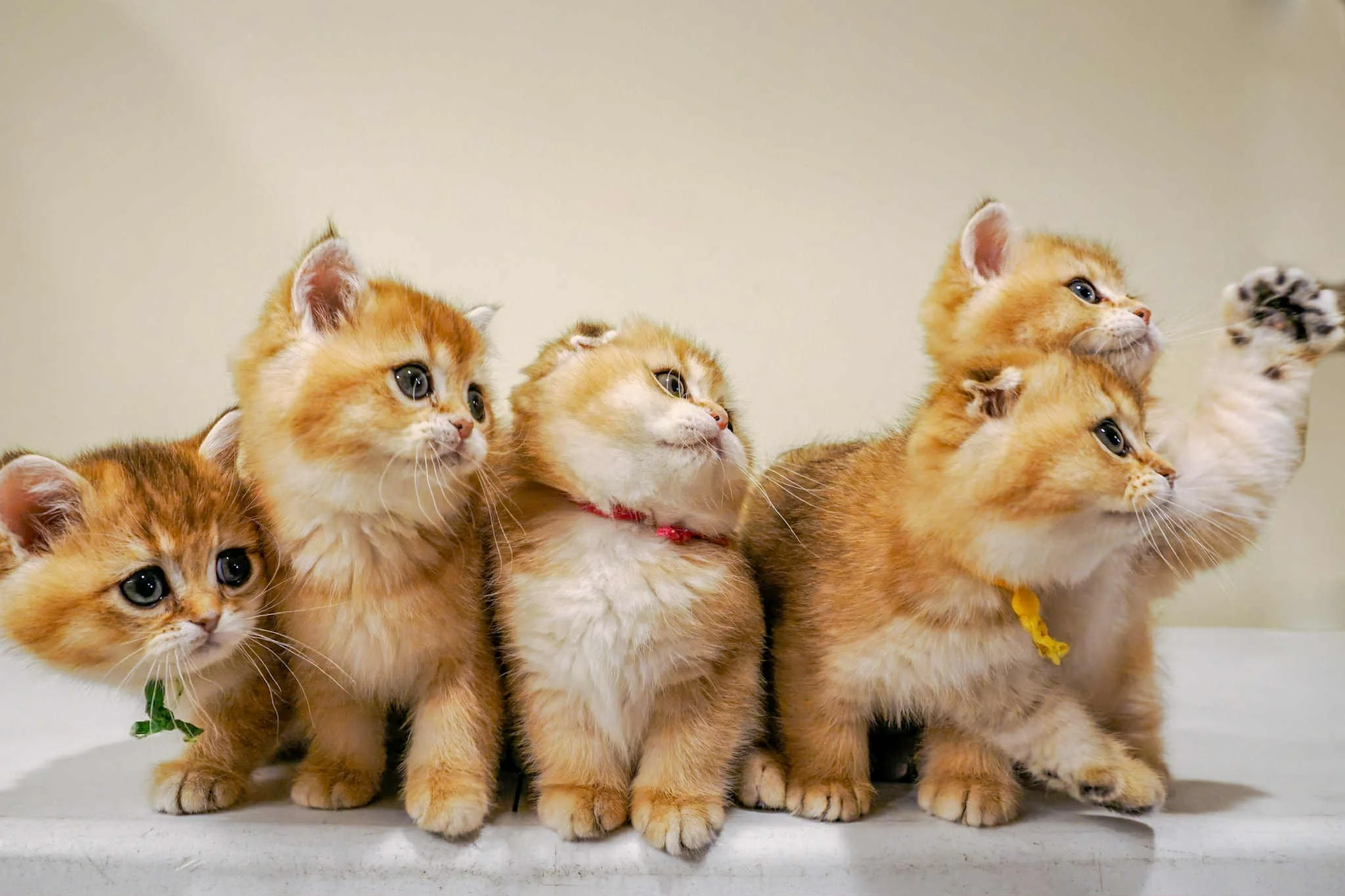
PurrfectlyFold - Five scottish fold and scottish straight black golden shaded kittens
Types of Cat Breeds
Natural Breeds
These breeds originated naturally in specific regions long before modern breeding existed.
Examples include:
American Shorthair – traditional North American shorthaired cats
Norwegian Forest Cat – Scandinavian longhaired cats
They developed through natural selection rather than human intervention.
Mutation-Based Breeds
These breeds are formed around a spontaneous genetic mutation. Breeders preserve and standardize these traits.
Examples:
Abyssinian (ticked pattern mutation)
Sphynx (hairlessness)
Cornish Rex, Devon Rex (curly coat mutations)
American Curl (backward-curling ears)
Scottish Fold — A Key Mutation-Based Breed
The Scottish Fold is globally recognized for its natural cartilage mutation that creates folded ears.
Key points:
The mutation is dominant.
Ethical breeders pair Fold × Straight, never Fold × Fold.
Scottish Folds are known for their gentle, affectionate, people-oriented nature.
Leg structure, tail flexibility, and cartilage health are monitored carefully.
Scottish Folds come in four EMS-coded varieties:
SFS – Scottish Fold Shorthair
SFL – Scottish Fold Longhair
SCS – Scottish Straight Shorthair
SCL – Scottish Straight Longhair
At PurrfectlyFold, all breeding cats are DNA-tested, and kittens come from traceable, responsible, and ethical lines.
Combination or “Designer” Breeds
These breeds are created by mixing traits from multiple breeds. For example, someone might attempt to combine:
Curl ears
Hairlessness
Persian face shape
While interesting, most do not gain popularity because:
Too many mutations can appear “odd”
Health risks increase
One distinctive trait is usually enough for most owners
Wild-Looking or Hybrid-Origin Breeds
These breeds aim to resemble wild felines.
Examples:
Bengal – a true hybrid with Asian Leopard Cat ancestry
Tiger-like domestic breeds (created through selective breeding, not actual tiger genes)
Some domestic × wild hybrids are fertile and can be bred back to domestic cats to create a new breed.
Human-Designed Breeds
These breeds were developed to achieve a desired appearance and temperament.
Example:
Ragdoll – bred for a specific look and extremely gentle disposition
Not all breeds fit neatly into the categories above, but these five help simplify the complex world of feline breeding.
How Common Are Cat Breeds Worldwide?
Breed presence varies enormously by country:
Natural breeds tend to dominate their native regions
Newer breeds may be popular in Europe but rare in the U.S.
Some breeds are banned in certain countries due to health or welfare laws
If a breed is not familiar in your area, you can research through:
Local cat associations
Wikipedia’s breed list
PawPeds breed database
Understanding EMS Codes
EMS stands for Easy Mind System, developed by FIFe in 1989.
It provides a universal code for describing:
Breed
Color
Pattern
Coat type
Additional traits (white spotting, eye color)
This avoids confusion between countries and clubs using different names for the same color.
Why EMS Matters
Consistency in pedigrees
Easier color identification
Helps breeders understand genetic relationships
Required for PawPeds entries
EMS Codes for Scottish Fold & Other Breeds
Below is a simple table explaining EMS codes you will commonly see:
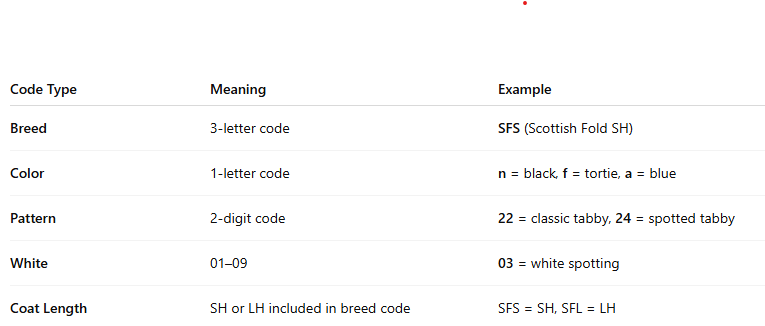
Example of EMS codes
Examples of Scottish Fold EMS Codes
SFS n 22 03 — Scottish Fold SH, black classic tabby with white
SFL f 24 — Scottish Fold LH, tortie spotted tabby
SCS a 21 — Scottish Straight SH, blue mackerel tabby
At PurrfectlyFold, kittens like Bella (SFS f 22 03) and Branson (SFS n 24 03) use these EMS codes to clearly communicate their pattern and color.
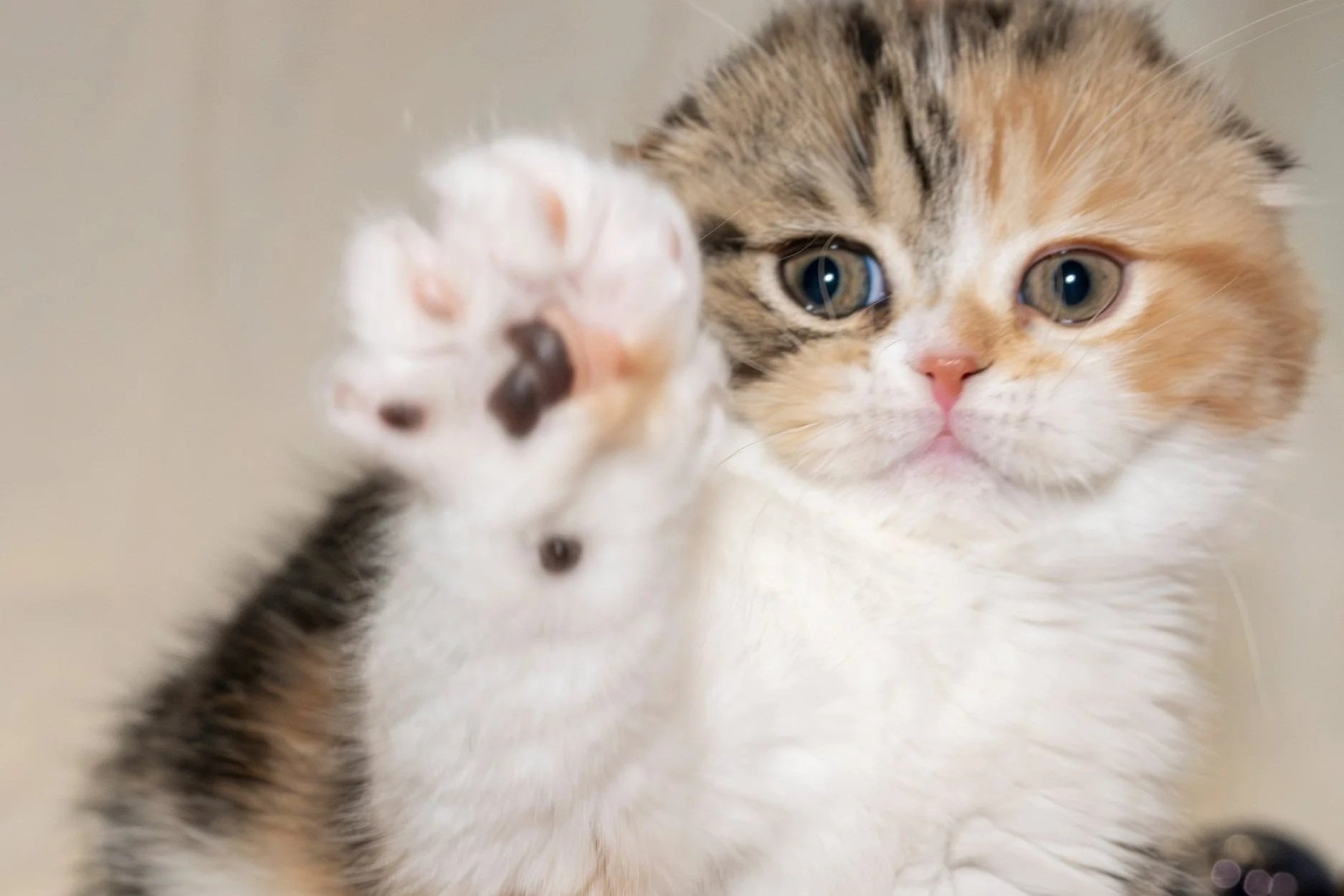
Bella of PurrfectlyFold - classic tabby bicolor tortie