
Understanding Cat Colors: Pigments and Dilution
Cats display an incredible variety of colors, and this diversity comes down to two main pigments:
Black (eumelanin)
Red (phaeomelanin)
What makes feline coloration fascinating is how these pigments are linked to the X chromosome, one of the two sex chromosomes. The other sex chromosome is the Y chromosome, which determines maleness.
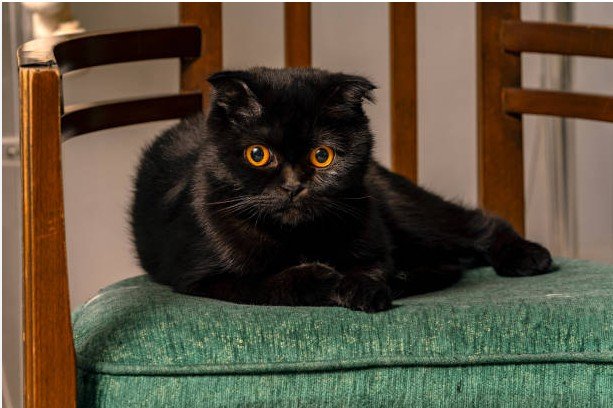
Black Scottish Fold Kitten
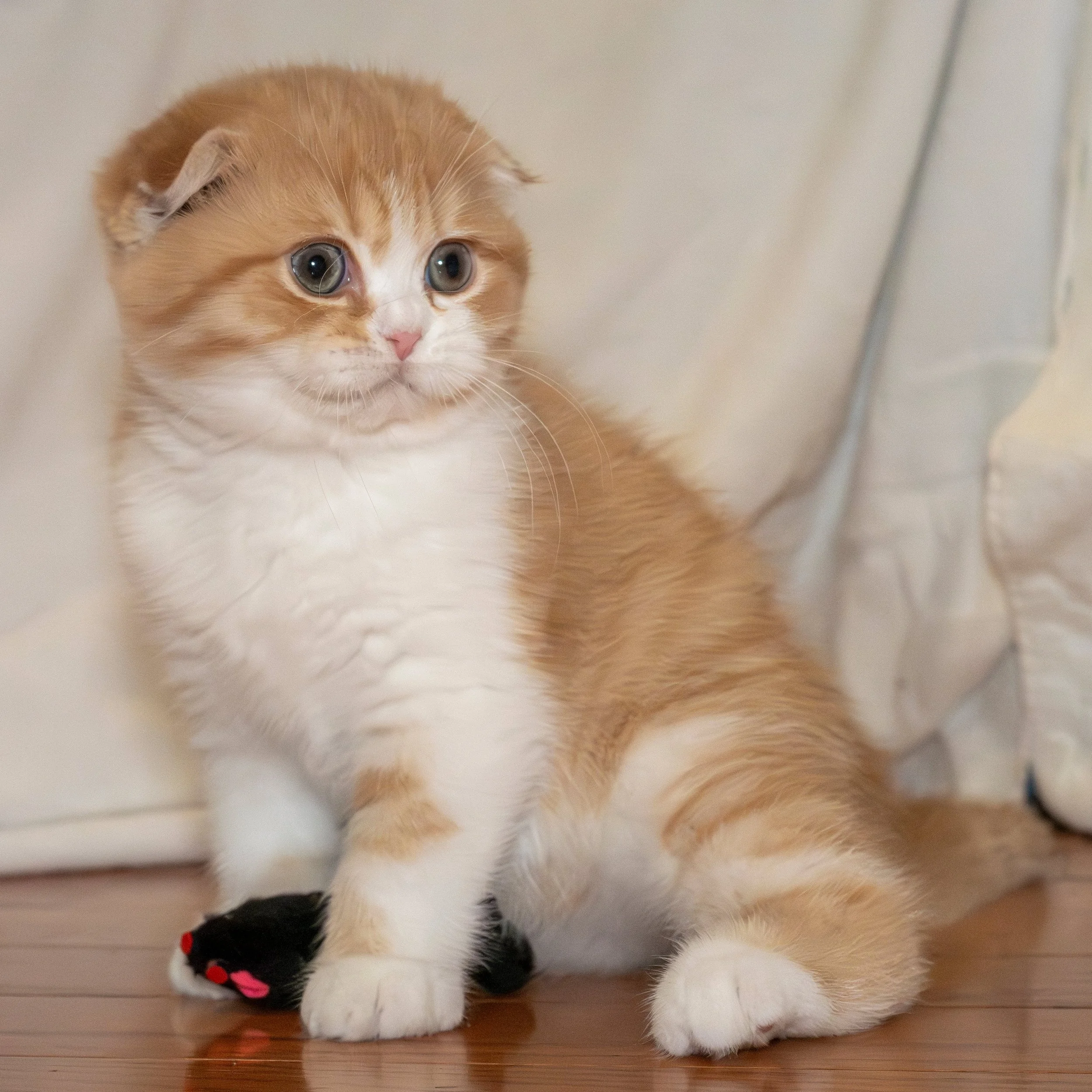
Red Bi-color Scottish Fold Kitten
Why Female Cats Show Multiple Pigments
Female cats have two X chromosomes, allowing them to carry both black and red pigment genes. This combination produces the classic tortoiseshell, or tortie, coat.
If a female has two black pigment genes, she appears black.
If she has two red pigment genes, she appears red.
When both pigments are present, she displays the tortoiseshell pattern.
This is why you’ll see such stunning variety in female cats, even within the same breed.
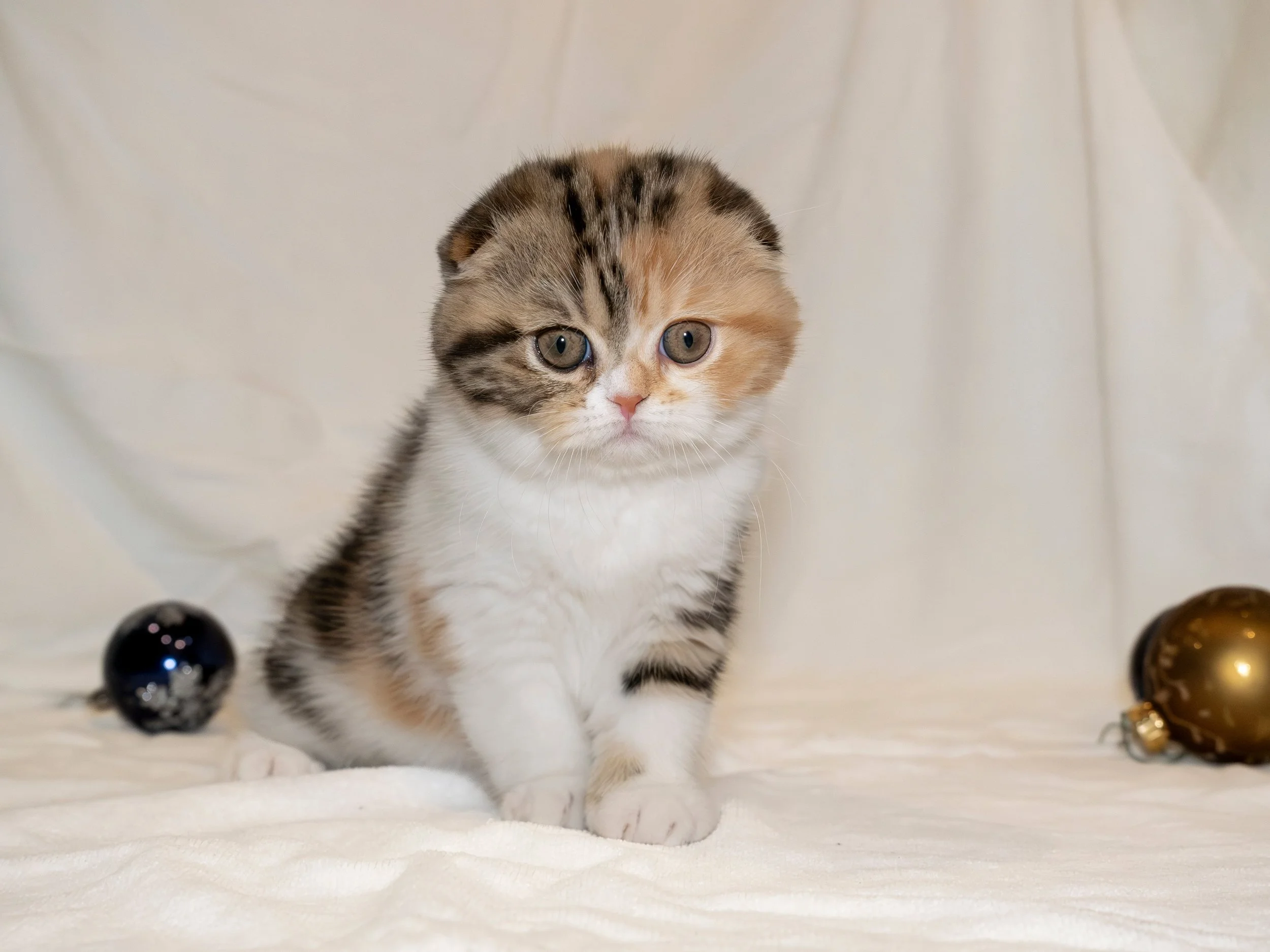
Tortie bi-color scottish fold kitten
Male Cat Pigments
Males, on the other hand, normally have only one X chromosome, so they display either black or red pigment—but not both. Male tortoiseshell cats are extremely rare and usually genetic anomalies.
Dilution: Softening Cat Colors
Dilution is a genetic factor that lightens a cat’s base color, giving it a softer appearance:
Black → Blue
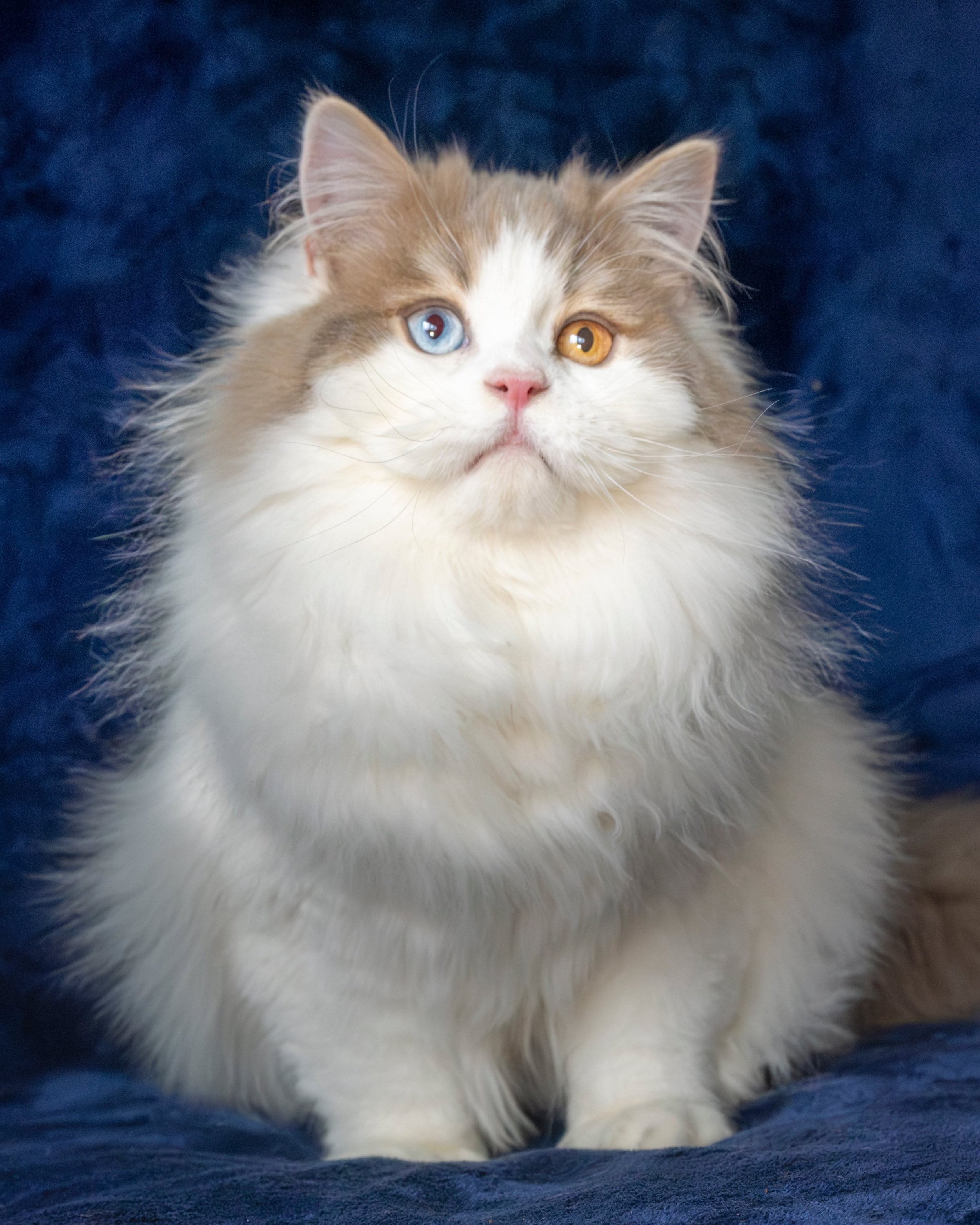
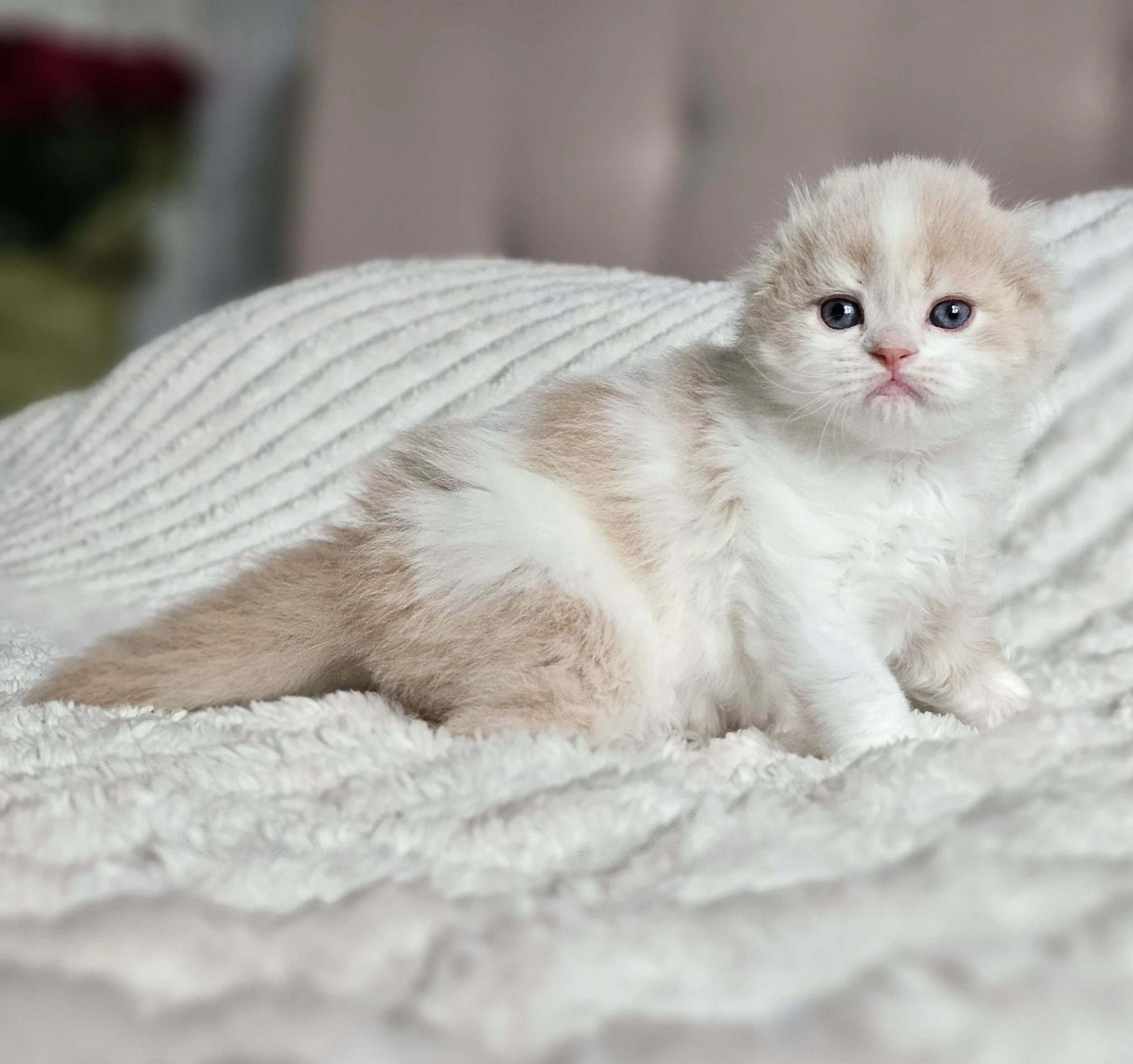
Red → Cream
Black tortie → Blue tortie
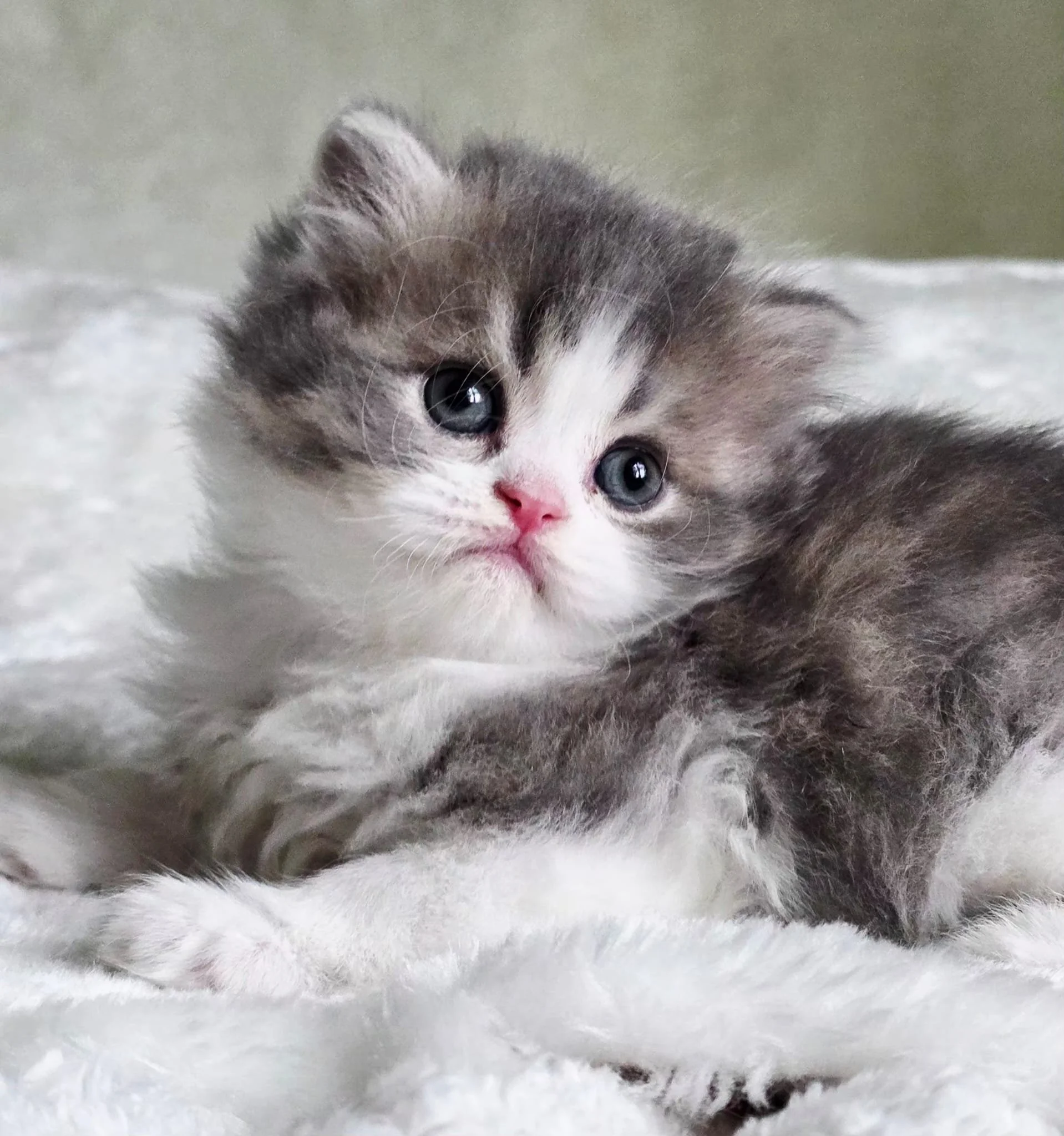
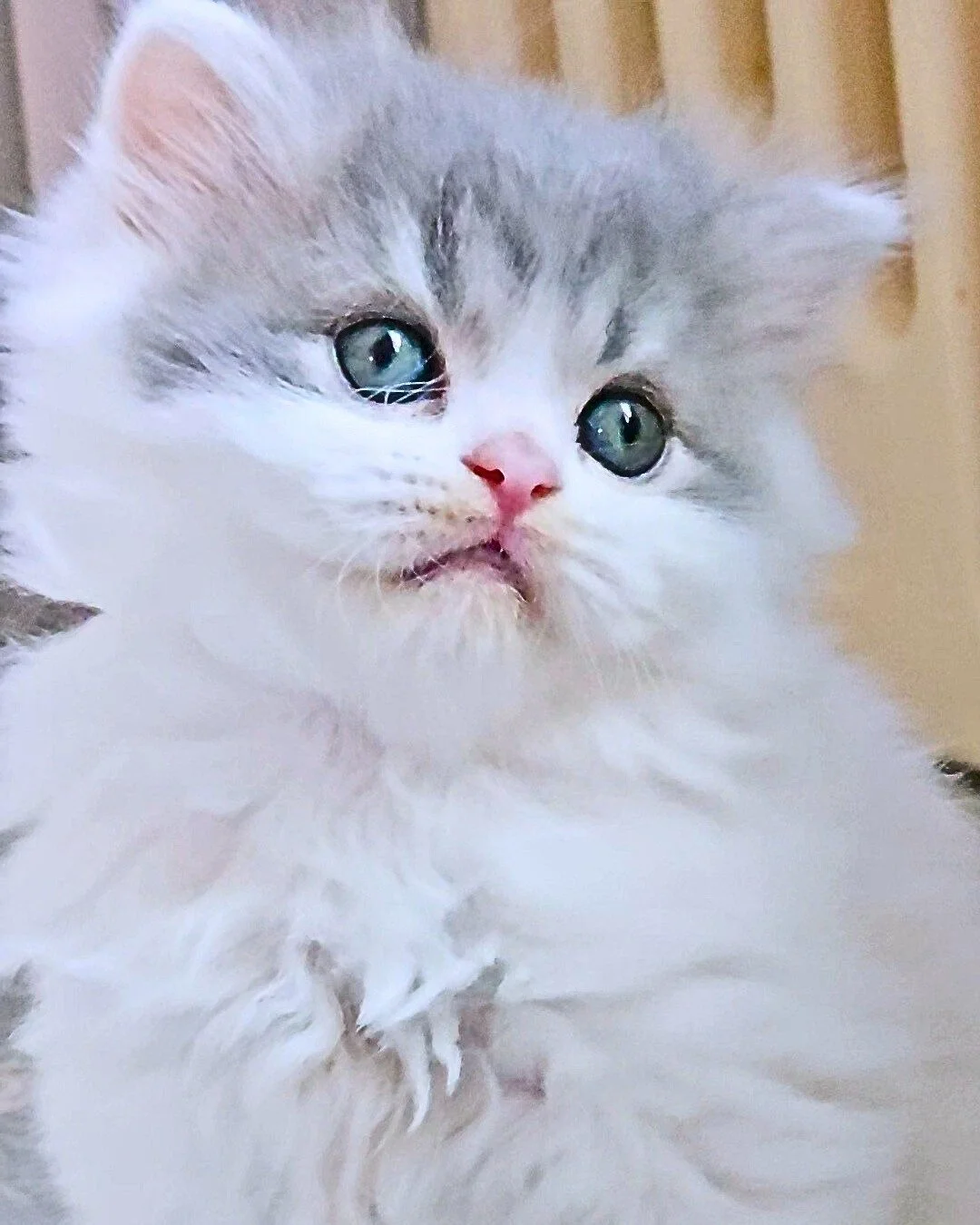
Dilution occurs because the appearance of pigments changes depending on other genes carried by the cat. This is why a black cat can vary from deep jet black to a softer, smoky blue.
Cat color genetics are fascinating, and black pigment alone shows tremendous variation depending on the genetic background of the cat. Future articles in this section will explore these variations in more detail.