Scottish Fold Cat Body Condition Score: How to Recognize Your Cat’s Weight Category
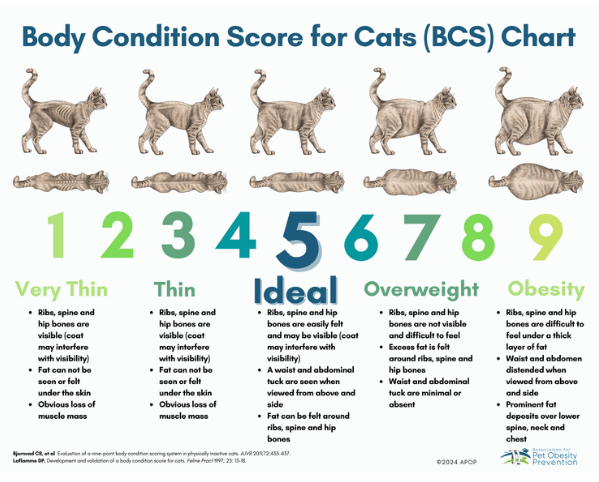
Body Condition Score For Cats
Veterinarians don’t judge a cat’s weight by pounds alone — they use the Body Condition Score (BCS) system, a 1–9 scale that looks at fat distribution, waistline, ribs, and abdominal shape.
This chart helps owners understand whether their cat is underweight, ideal, or overweight using the same criteria used in vet clinics.
🔵 UNDERWEIGHT (1–3)
BCS 1 — Emaciated
Ribs, spine, and hip bones visible from a distance
No fat felt
Severe muscle loss
Abdomen looks “tucked up”
Urgent veterinary attention needed
BCS 2 — Very Thin
Bones easy to see
Very little fat
Obvious waist
Minimal muscle tone
BCS 3 — Thin
Ribs palpable with almost no fat covering
Pronounced waist
Abdominal tuck very visible
🟢 IDEAL (4–5)
This is the healthy, recommended weight range.
BCS 4 — Lean Ideal
Ribs easy to feel with thin fat covering
Noticeable waist
Abdominal tuck visible
BCS 5 — Perfect Ideal
Ribs easy to feel with slight fat covering
Defined waist behind ribs
Abdominal tuck present
No sagging stomach (primordial pouch is okay)
This is what you want for Scottish Fold cats — especially because extra weight stresses their joints.
🟡 OVERWEIGHT (6–7)
BCS 6 — Slightly Overweight
Ribs harder to feel
Waist not obvious
Abdominal area slightly round
Early fat pad forming near stomach
BCS 7 — Overweight
Ribs difficult to feel under fat
No waistline
Rounded belly from the side
Visible fat deposits near lower back and abdomen
🔴 OBESE (8–9)
BCS 8 — Obese
Ribs almost impossible to feel
Big rounded belly
Broad, flat back from above
Large fat deposits over spine, face, and limbs
BCS 9 — Severely Obese
No waist
Belly hangs low
Massive fat deposits
Difficulty moving, grooming, jumping
Breathlessness, heat intolerance
High risk for diabetes, arthritis, and heart disease.
How to Check Your Cat’s BCS at Home (Just Like a Vet)
Feel the ribs
Easy to feel = healthy
Hard to feel = overweight
Sharp and prominent = underweight
Look from above
Hourglass shape = ideal
Rectangle shape = overweight
Very narrow = underweight
Look from the side
Abdominal tuck = ideal
Rounded belly = overweight/obese
Extreme tuck = underweight
Evaluate fat pads
Small pouch is normal
Heavy, swinging fat = overweight
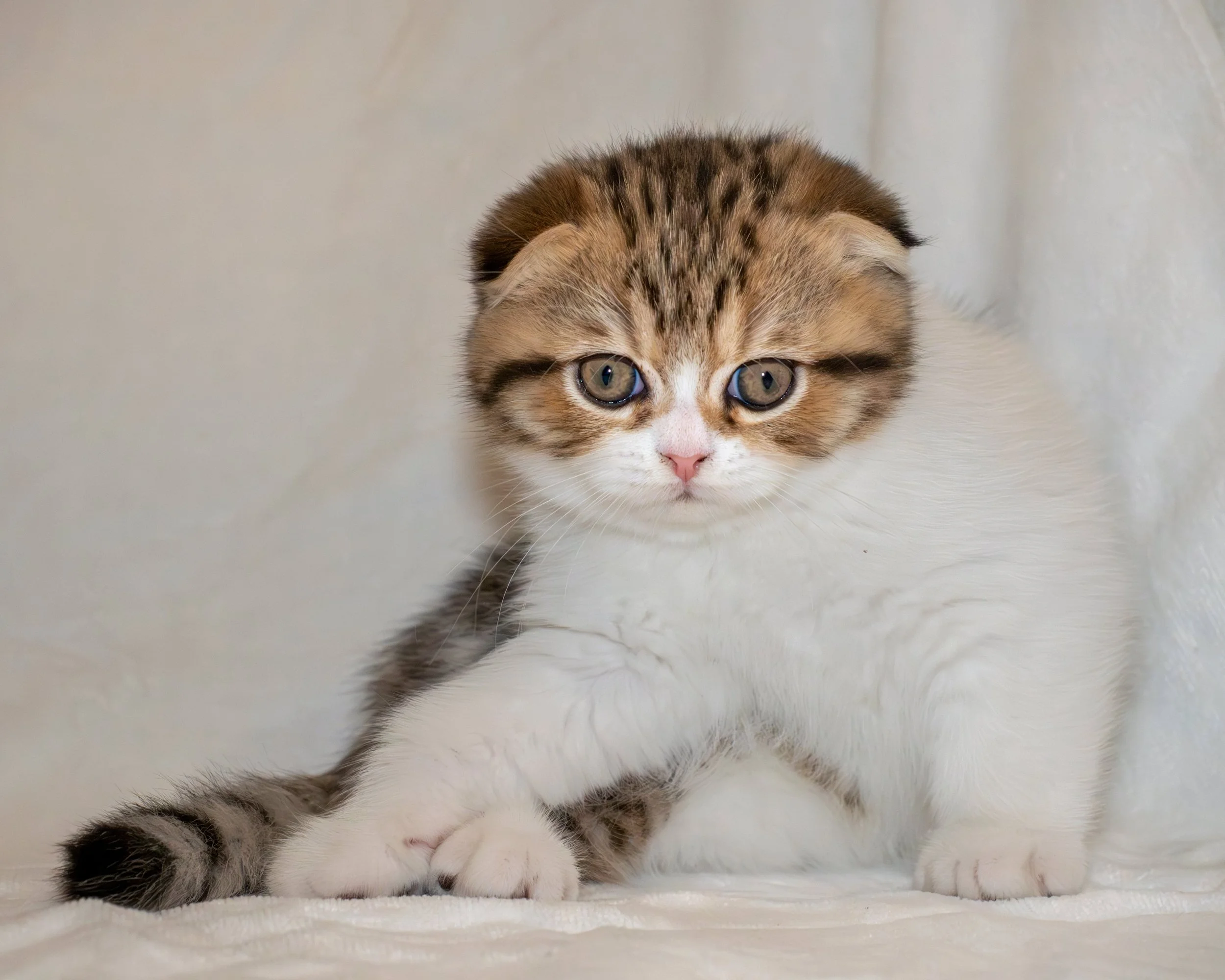
Rocky of PurrfectlyFold Scottish Fold bi-color brown short hair